The Best Fluffy Pancakes recipe you will fall in love with. Full of tips and tricks to help you make the best pancakes.


Know the exact protein sources, joint-support nutrients, and omega-3 ratios your Pitbull needs to thrive, but discover the crucial step everyone forgets next. When we set out to make the best food for a Pitbull, we focus on more than just protein content—we target joint support, lean muscle, skin health, and stable energy. We start with clearly named animal proteins, correct calcium-to-phosphorus ratios, and proven omega-3 sources, then match portions to body condition and activity. The real difference comes when we combine these principles into practical, balanced meals you can safely prepare at home…
Table Of Contents
hide
Key Takeaways
- Build meals around named lean animal proteins, controlled calories, and omega‑3 fats (EPA/DHA) to support muscle, joints, and skin/coat health.
- Use high‑quality, clearly labeled ingredients that meet AAFCO standards; avoid vague “meat meal,” artificial colors, flavors, and unnecessary preservatives.
- Design an AAFCO‑compliant, life‑stage‑appropriate recipe with your vet, then weigh all ingredients precisely and cook with strict food‑safety practices.
- Feed according to life stage and body condition: more frequent meals for puppies, controlled portions for adults, adjusted calories and fiber for seniors.
- Monitor body condition, stool, skin, coat, and energy weekly, and adjust ingredients or portions gradually under professional guidance if issues appear.

Understanding Your Pitbull’s Nutritional Needs
A pitbull’s nutritional needs center on supporting lean muscle, joint health, and a healthy skin and coat, while preventing excess weight and food-related sensitivities. As we learn together, we ground decisions in understanding metabolism, not marketing. Pitbulls typically have higher muscle mass and energy expenditure, so they require appropriately higher-quality protein and controlled calories to maintain ideal body condition.
We also prioritize joint protection and inflammatory control. That’s where essential fatty acids, especially EPA and DHA, become clinically important for cartilage support, skin integrity, and immune balance. We watch for signs of intolerance—itching, soft stool, or gas—and adjust nutrient profiles, not just portions. nique physiology.
Choosing High-Quality Ingredients for Optimal Health
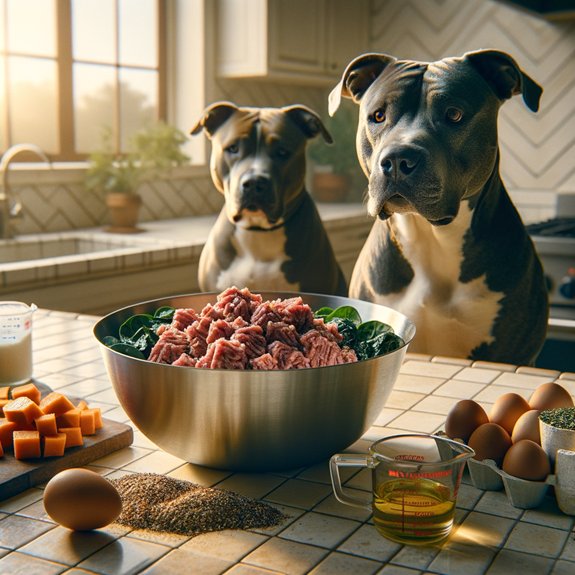
Now that we’ve mapped out what a pitbull’s body needs, we can focus on which ingredients actually deliver those nutrients in a safe, bioavailable form. When we’re choosing ingredients, we prioritize named animal proteins (like chicken thigh, turkey, beef, or salmon) as the primary source of essential amino acids.
We avoid vague terms such as “meat meal” without a species label and steer clear of artificial colors, flavors, and unnecessary preservatives. In sourcing quality components, we look for USDA-inspected meats, human-grade or feed-grade ingredients that meet AAFCO standards, and produce free of visible spoilage.
We also value omega-3–rich fats, low-glycemic carbohydrates, and chelated minerals to support joints, skin, immune function, and lean muscle maintenance.
Step-by-Step Guide to Preparing Balanced Homemade Meals
Before we start cooking for a pitbull, we break the process into clear, safe steps that protect their health and digestion. First, we confirm weight, body condition, and any diagnoses with a veterinarian or veterinary nutritionist. Then we calculate calories and macronutrient targets: roughly 18–22% protein, 10–16% fat (dry matter), with verified vitamins and minerals.
| Step | Clinical focus |
|---|---|
| 1. Assess dog | Medical history, labs if indicated |
| 2. Design recipe | AAFCO-compliant formulation |
| 3. Measure precisely | Use a digital scale, no guessing |
| 4. Cook safely | Proper temperatures, avoid cross‑contamination |
| 5. Store correctly | Refrigerate or freeze |
We avoid unrelated discussion or off topic chatter and instead document each batch, monitor stool quality, skin, and energy, then adjust only with professional guidance.
Sample Meal Plans for Puppies, Adults, and Seniors
How do we translate nutrient targets into practical bowls for pitbulls at different life stages? We start energy density, protein, and micronutrients to concrete portions.
For puppy growth, we might feed three to four meals daily: a sample meal could be 40% lean turkey, 30% cooked rice, 20% pumpkin, and 10% calcium-balanced topper (like vet-approved mineral mix), plus DHA from fish oil. This supports rapid tissue development and joint health.
For adults, we shift to twice-daily meals: 45% lean beef, 25% oats, 20% mixed vegetables, 10% organ meat, with controlled fat.
For seniors, we respect slower senior metabolism: 35% lean white meat, 30% low-glycemic carbs, 25% fiber-rich vegetables, 10% omega-3–rich fish.
Monitoring Your Pitbull’s Health and Adjusting Their Diet
We’ve built sample meal plans, but the real work happens as we watch how your pitbull’s body responds to what’s in the bowl. When we commit to monitoring health, we serve their well‑being with the same care we’d offer a family member.
Let’s track data, not guesses. We’ll observe, record, then respond by adjusting diet in measured steps:
- Body condition – Check ribs, waist, and muscle tone weekly; aim for lean, defined musculature without visible ribs.
- Stool quality – Note frequency, firmness, and presence of mucus or blood; consistent changes warrant a veterinary consult.
- Skin, coat, and energy – Watch for itching, dull coat, or fatigue after meals.
- Performance and recovery – For active pitbulls, monitor stamina and post‑exercise soreness to refine calories and macros.
Frequently Asked Questions
Can Homemade Pitbull Food Help With Common Allergies or Skin Problems?
Yes, it can sometimes help, especially when we pair allergy testing with carefully balanced homemade diets. We’d monitor ingredients, document reactions, and share discussion ideas with your veterinary team to adjust recipes and support your Pitbull’s skin health.
How Do I Transition My Pitbull From Kibble to Homemade Food Safely?
We shift slowly, we monitor closely, we adjust compassionately: follow a 7–10 day shift timeline, mix increasing homemade portions with kibble, use gradual calorie adjustment, track stool, weight, and itchiness, and consult your veterinarian before major changes.
Is It Safe to Include Raw Bones in My Pitbull’s Homemade Diet?
We generally shouldn’t feed raw bones because safety concerns include tooth fractures, choking, and intestinal perforation. If you still consider raw bones, we’d urge you to involve your veterinarian for individualized risk assessment and safer alternatives.
How Can I Store and Freeze Homemade Pitbull Meals Without Losing Nutrients?
We recommend portioning meals, rapid chilling, then sealing airtight for storage freezer use; this minimizes oxidation and maximizes nutrient preservation. Label dates, avoid repeated thaw–refreeze cycles, and thaw in the refrigerator to protect your pitbull’s gastrointestinal health.
What Emergency Foods Are Safe for Pitbulls if I Run Out of Homemade Meals?
Like a safety net, we can keep emergency shelf stable options: plain canned chicken, low-sodium canned salmon, pumpkin purée, and rice; these protein alternatives support your pitbull briefly, but we’ll resume balanced homemade meals ASAP.
Conclusion
When we put this all together—evidence-based nutrients, precise portions, and careful cooking—we’re not just dishing up dinner; we’re building lifelong health, one bowl at a time, like dialing in a nutrition playlist on Spotify. coat, we can adjust quickly. Let’s partner with our veterinarian, stay data-driven, and keep our Pitbulls thriving, energetic, and comfortable at every life stage.